Every year I was at university I grew more and more upset that TIFF fell exactly when I couldn’t attend. I’d never even been to TIFF before and my FOMO was off the charts. So ever since I’ve been back in Toronto, I’ve tried my best to see as many movies as I possibly can. Of course, COVID got in the way at first: I had to settle for watching each film from the insipid safety of my couch, but that allowed me to ease into my TIFFiosity so I didn’t overdo it too quickly and burn out. Now that I’ve finally gotten accustomed to the true TIFF experience, I let myself go all-in this year. I saw 10 movies over the course of the festival and spent a completely stupid amount of money but it was worth every darn cent! Yes, even for the ones I didn’t like. That’s TIFF, baby! Now please enjoy this ranking of each film from worst to best – spoiler, the movies get good very early on!
#10. Pedro Paramo (Mexico)
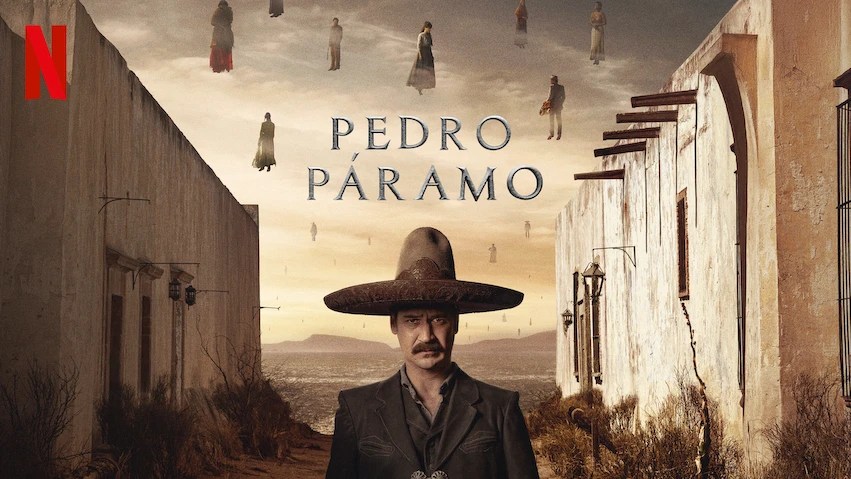
First and least was Pedro Paramo, a film that a man sitting behind me at another screening a week later described as “so Netflix it hurts”. I have no idea what that means, nor do I necessarily agree, but I do think it’s a hilarious criticism and I wish I’d had the cajones to get up and discuss his fascinating thoughts further.
My own criticism is a little more nuanced than his. I went in knowing absolutely nothing about the history of the narrative being told and while usually I love to see a movie as blindly as possible, I think some homework could’ve served me well in this case. Pedro Paramo is arguably the most famous modern Mexican novel – despite it being thoroughly confusing on both a first and second reading, at least according to the film’s director, Rodrigo Prieto (best known as the cinematographer for, most recently, Killers of the Flower Moon and Barbie). This confusion has certainly made its way to the screen.
The actual story isn’t too hard to follow; it tells the tale of a man, Juan Preciado, wandering through a deserted town and, with the help of some ghosts, slowly piecing together the town’s history and how his own father (the eponymous Pedro) decimated such a vibrant place with his casual villainy. The film switches back and forth between snippets of the town’s past and Juan’s descent deeper into the town’s roots…until it stops cutting back to Juan at all, leaving us severed from an important connection to why we’re witnessing all this in the first place.
The bigger issues are in the details. First and foremost, I walked out of the theatre having no idea what the film was trying to be or trying to say. I can’t speak to the novel – though, considering its status as a classic, I’m sure it’s an improvement – but the film feels aimless in its ideas, never quite cementing into anything that I could discern as a strong thesis. This makes its style all the more frustrating: it feels like a non-linear series of discrete events instead of a film with a satisfying throughline. I also found the performances lacking a certain oomph; perhaps that’s what the man behind me meant since many a Netflix production tends to feel that same way. Sometimes the performances feel like they’re trying to be grounded, other times they’re playing up the ghostly aspect and heightening things to a point that I’m not a fan of. I’ve also heard praise that the movie is quite a looker but…let’s be honest, would you be saying that if it weren’t directed by a famous cinematographer? I can’t say that any particular shot stood out to me; it was far from a boring film to stare at but one would expect more visual flair from such a talented cinematographer-turned-director.
Ultimately, I’m extremely glad this is the worst film on my list. I’ve seen worse movies – hell, I’ve seen way worse movies at TIFF before! I didn’t know it at the time, but this was an excellent sign of films to come.
#9. Don’t Cry, Butterfly (Vietnam)
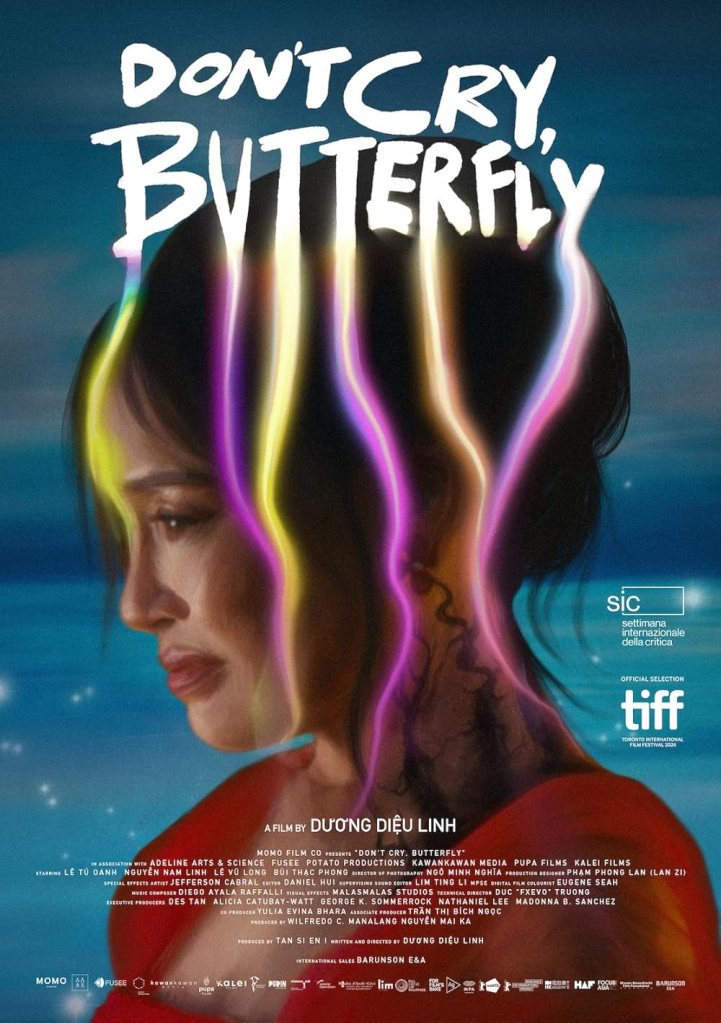
Don’t Cry Butterfly oddly shares a lot of the same problems Pedro Paramo had but in an extremely different context. The film follows a Vietnamese family – a husband, wife, and one daughter – in the fallout of the husband’s affair being revealed to the world when he gets televised with his extramarital partner at a soccer match. Attaching a genre to this movie is difficult – one minute it’s a comedy, the next it’s a drama, and, occasionally, it dives right into some bizarre horror. It juggles the varying genres pretty deftly, which is confounding considering the film’s main problem is that it can’t juggle anything else.
While with Pedro Paramo you couldn’t quite make out anything it was trying to say, Don’t Cry, Butterfly is trying to say so many things at once that it gets completely lost in the woods the film itself planted. It’s about…motherhood! No, it’s about forgiveness! Wait, it’s about projecting hopes and dreams! Or maybe it’s about apathy and neglect! Or depression! Or gender dysphoria! I think I could keep going, listing each and every theme that’s brought up and never paid off. The ending seals the deal with a baffling series of events that calls into question everything I’d enjoyed about the movie previously. Some films, and some filmmakers, were not meant to deal with arthouse nonsense and this is a textbook example. Had this been a simpler film with slightly more likeable, more fleshed out, and less repetitive characters, it could’ve been a highlight of my TIFF. It didn’t need any of the artsy-fartsy baloney that, in more experienced hands, might have been cut entirely or at least improved upon. But alas, I can only review what I see, not what I wish I’d seen.
#8. Wishing on a Star (Italy)

This will be one of my shortest reviews because I feel dumb and confused and can’t find a way to reconcile this. I watch very few documentaries, and I feel like this is where my confusion lies. Wishing on a Star follows an older Italian woman, Luciana, who reads people’s astrological signs and assigns them birthday trips to places she has “calculated” to be ideal for their spiritual rebirth. I found Luciana herself to be the most interesting character; she seems to believe so wholeheartedly in her whole schtick and yet, when it comes down to evaluating herself, she ignores the stars and wishes to control her own fate. Luciana feels real. For whatever reason, and I’m sure it’s partially my fault for being a documentary amateur, nobody else met Luciana’s presence and genuineness. And I don’t just mean in a human sense; I had this strange feeling during nearly the entire film that everyone was saying lines that had been written for them, like they were in a work of fiction. Some events felt played up and unbelievable. Still, right now, after telling myself for days that any documentarian would have their reputation ruined for faking something like this, I can’t shake it. I feel ill-equipped to judge this film as a result.
In brief praise, I will say that the film is gorgeously shot and you can understand why some of Luciana’s clients really do find a lost part of themselves during their birthday trips to exotic locales. In brief criticism, I think Wishing on a Star drags in spots, occasionally focusing on clients I found significantly less interesting than others. I think someone who is more enthusiastic and knowledgeable about documentaries would get far more mileage out of this film than I did.
#7. It Doesn’t Get Any Better Than This (USA)

The TIFF blurb for It Doesn’t Get Any Better Than This tells us that in the film, the divide between documentary and nightmare blurs. I went in expecting the nightmare, my wonderful girlfriend went in expecting the documentary. Let’s just say…I felt a little more prepared for the joyously horrific sights and sounds we experienced that lovely evening.
The film is from the perspective of a fictional-slash-somewhat-not-so-fictional filmmaker duo (Nick Toti and his wife Rachel Kempf) who buy an extremely dilapidated house in their hometown to shoot their next spooky movie in (this part is true, like real life true). Unfortunately for them, it turns out to be a portal to hell (this part is false, like demons don’t exist false). Cue the ear-piercing unearthly demonic screams and shaky cam, just-out-of-shot scares. It’s accomplished in spookiness; much less accomplished in believability considering it’s practically begging you to compare it to The Blair Witch Project.
It gets awkward when it comes to talking about the film’s characters. For the first 25 minutes or so, the leads are almost literally not acting; they’re a legit documentary crew filming some behind the scenes footage for the film they’re about to make (the allegedly upcoming Homebody). So…to call Rachel Kempf an annoying character feels personal and kinda mean in a way that makes me hesitate to even write this. But, in a weirder way, Rachel’s shrillness and outgoing nerdiness adds to the sense of warped reality – she can’t really act and probably knows that, so what we’re seeing is, arguably, not really acting at all. Nick feels more natural despite him also not being an actor whatsoever; he adds a quiet, geeky, slightly pathetic presence. Christian (credited only as Christian on IMDb seemingly for privacy purposes) is, sadly, just bad. As are the majority of the bit parts, of which there are mercifully few.
This is a film that knows its absurdly tight no-budget limitations and mostly functions within them to create an effective, if quaint, film about a haunted house. It feels slightly in over its head being at TIFF but it feels passionate in a way I can readily respect.
#6. Meat (Greece)

Meat is easily the most straightforward film I saw at TIFF this year. We open in the Greek countryside with an argument – the language of pretty much the entire movie. A local butcher/swindler (Akilas Karazisis) is feuding with his recently released ex-con neighbour regarding land rights. Tempers escalate as the butcher’s son (Pavlos Iordanopoulos) and the young man he effectively raised (Kostas Nikouli) watch on. Later, when the neighbour sneaks onto the butcher’s farm to poison the sheep late at night, the son grabs a gun and kills him. The two younger men begrudgingly take it upon themselves to hide the body – poorly, at that – and what proceeds is a quite thrilling drama about betrayal, loyalty, and the pitfalls of trying to remain passive in a situation that requires precise decision-making. Every character is either entertainingly detestable or endearingly dumb but the movie is smart enough to take itself seriously, making it easy to find yourself fully invested in this dysfunctional family. Credit to every performer; they all feel authentic and thoughtful in the way their characters handle a difficult situation as poorly as possible. Meat‘s one major ding is that it has one of those Ambiguous with a capital A endings, one of those endings that feels like it leaves off just a minute or so before it should just so the film can pretend it’s a little deeper than it is. I want to see what happens next, dammit! I suppose one could take that as a compliment.
#5. Linda (Argentina)
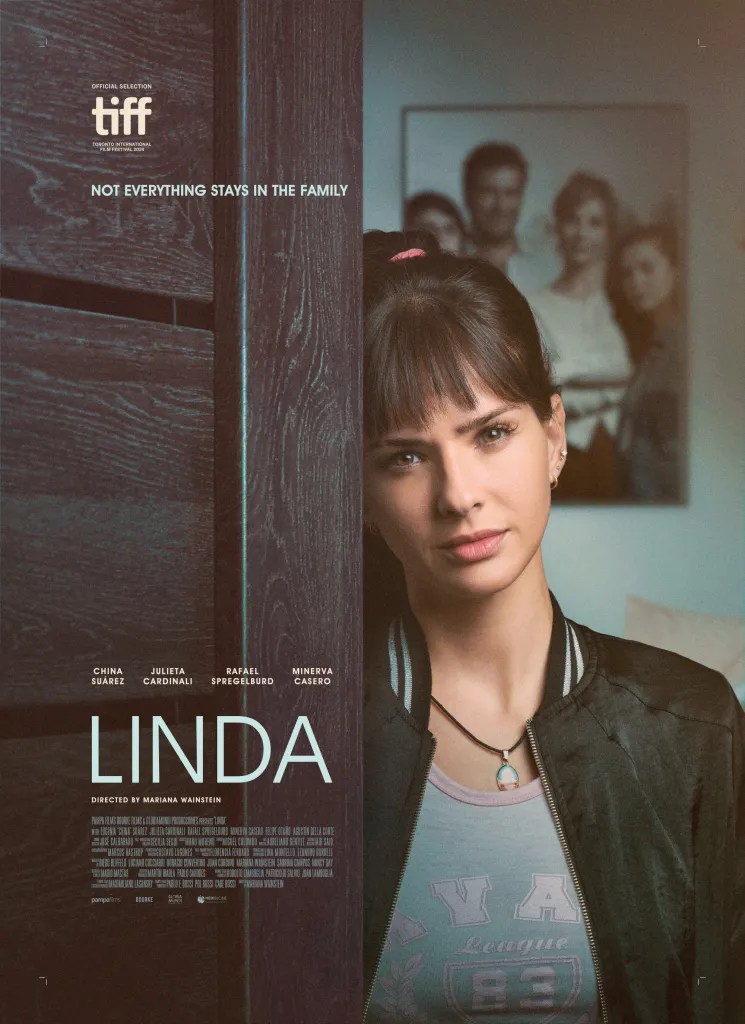
It brings me great joy that I like the 5th best movie I saw at TIFF 2024 this much. Linda is almost exactly what I expected it to be and is all the better for it: a stoic, unreadable, unconventionally beautiful housekeeper – Linda, of course – starts working at a wealthy family’s home and very quickly each member of the family becomes infatuated with her, unbeknownst to each other. While the premise is definitely mined for comedy at times, it mostly opts to make the audience as uncomfortable as possible with its eroticism and the brilliantly vague motivations of its protagonist.
Once I realized that I would never understand what or who Linda actually is, I started to appreciate the movie far more than I already did. You end up knowing so much about each member of the family as they project their values and wants onto this enigma of a woman; inevitably, you feel as though you’ve started to project onto her as well. She has strong desires of her own but the nature of her desires are completely obscured, to the frustration of the family and to the delight of me. Linda almost feels like a mythological figure, a trickster entity that brings hidden tensions to the forefront and leaves before the dust settles.
The finale is fitting and restrained; the film knows better than to release its strained emotions all at once and instead clings to them, not letting the family’s quiet comfort devolve into anything worse than quiet discomfort. Overall, I really really liked Linda – what? No, not like that! Get your mind outta the gutter!
#4. Else (France)
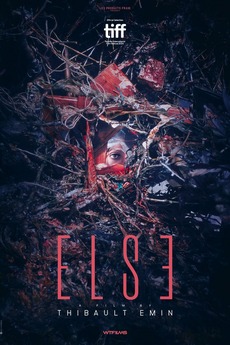
I was deeply disturbed by Else in a way not too many other movies have achieved. Perhaps only the video game SOMA has made me feel this kind of existential dread and fear of a future I know, deep down, is impossible but still has disquieting implications. That said, Else begins like it’s a quirky romantic comedy, of all things.
Anx (Matthieu Sampeur) and Cass (Edith Proust) have a one night stand despite the fact that they couldn’t be more different – he’s a meek, quiet shut-in, she’s extremely outgoing and unpredictable. Opposites begin to attract, though – both in terms of the unlikely pair and with regards to the sidewalk and the homeless man outside who appear to have merged into a sidewalk/man hybrid. A bizarre virus has struck the world that causes living beings to merge with the objects around them, resulting in horrifying abominations. As France goes into lockdown, Anx and Cass are thrust together despite barely knowing each other and true love begins to bloom. But…things outside are getting worse. And merged creatures are starting to invade their increasingly cramped apartment.
I won’t go into detail but from here, Else goes from straight horror to Cronenberg-y body horror to devastating emotional horror to some kind of skin crawling arthouse horror and, finally, leaves you with a horrific vision of the future that feels like it isn’t meant for human comprehension. Clearly, this is a lot to juggle. Director/writer Thibault Emin, thankfully, is talented enough to make it all feel like a smooth transition from love to tragedy, humour to horror, and even colour to black and white (and then to a sickly orange filter that’s rather compelling). Essentially, through all the suffering and madness, it’s a film about love and the things that matter less when you have it, and that heart shines through the gruesome cracks effortlessly.
#3. Vermiglio (Italy)
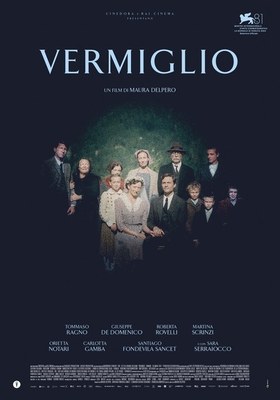
I don’t think I’m beating the allegations that I’ve become a bit of a softie because this is another movie about love near the top of my list. You could even say the exact same thing I just said about Else: it’s about love and the things that matter less when you have it. But Vermiglio shines its focus on the more toxic, less romantic aspect of the statement – that we tend to neglect the things we need when they aren’t what we love.
The film takes place in the titular small Northern Italian town in 1944, walking us through the lives of a family as the members come of age and/or come to a crossroads. The patriarch (Tommaso Ragno) is the town educator who takes great pride in his work and adores music, much to the detriment of his duties as a father and as a husband. The eldest daughter (Martina Crinzi) has fallen madly in love with a timid man (Giuseppe de Domenico) who’s just come back from the warfront, none the wiser to the secret he’s been keeping. One of the middle daughters (Rachele Potrick) is reaching two realizations at once: first, that she is scholastically inadequate in the eyes of her father (and therefore society at large), and second, that she’s become perplexingly fascinated by another young woman in town.
The first hour or so approaches these stories without any urgency, simply allowing these characters to live and discover themselves as we get to know them better as well. The plot begins to kick in later and by that time, it would be difficult not to be dedicated to these people and the desires they’ve either fully immersed themselves in or tried their best to resist. It’s a gorgeous film with some exemplary understated performances and some impressive child actors who never failed to get a laugh – the film is often very funny, surprisingly. Vermiglio could’ve gone on for another hour and I would’ve been happy just to stay with this family a little while longer.
#2. Friendship (USA)

I made a rare exception to my rule that I only see movies at TIFF that I’d never see in theatres normally because, well, my girlfriend and I just love Tim Robinson that much – and he did not disappoint. His first feature film, which follows up his wildly successful sketch comedy series I Think You Should Leave, is the hardest I’ve laughed in a theatre in I genuinely don’t know how long. To speak on the TIFF viewing experience itself for a moment, it’s wild to be entirely surrounded by like-minded Tim lovers who, predictably, all burst out laughing as soon as his face appeared on screen for the first time. It’s a testament to Tim’s ability to be funny 100% of the time, even when he’s not doing a darned thing.
But Friendship isn’t just for people who are already predisposed to cracking up at Tim doing a silly voice. In essence, it takes the characteristics of many a socially unadjusted weirdo that Tim is wont to play and plops them into one character, Craig Waterman, who lives in an otherwise grounded world with real consequences for his debaucherous strangeness. He’s somehow managed to hide his true nature enough to live an aggressively normal – if lonely – life with a (somewhat) normal wife (Kate Mara), a kid (Jack Dylan Grazer), and a morally questionable tech job. Everything changes when he meets his cool new neighbour, Brian (Paul Rudd), who takes a liking to Craig’s antics and whisks him on some low-stakes adventures. Craig is elated but, inevitably, his true nature as an uncomfortable soul emerges and he’s friend-dumped. Madness, obsession, and some insanely clever (and insanely dumb, often all at once) comedy ensues.
It’s dark but never too dark, weird but never so weird that it feels removed from reality, and it’s always finding new hilarious ways to unravel its characters. It doesn’t have time to be even the slightest bit boring; it’s so precisely paced that you’ll be laughing until its absolutely brilliant final bit. Friendship is a culmination of everything Tim has been building towards and it’s positively glorious.
#1. Julie Keeps Quiet (Belgium)
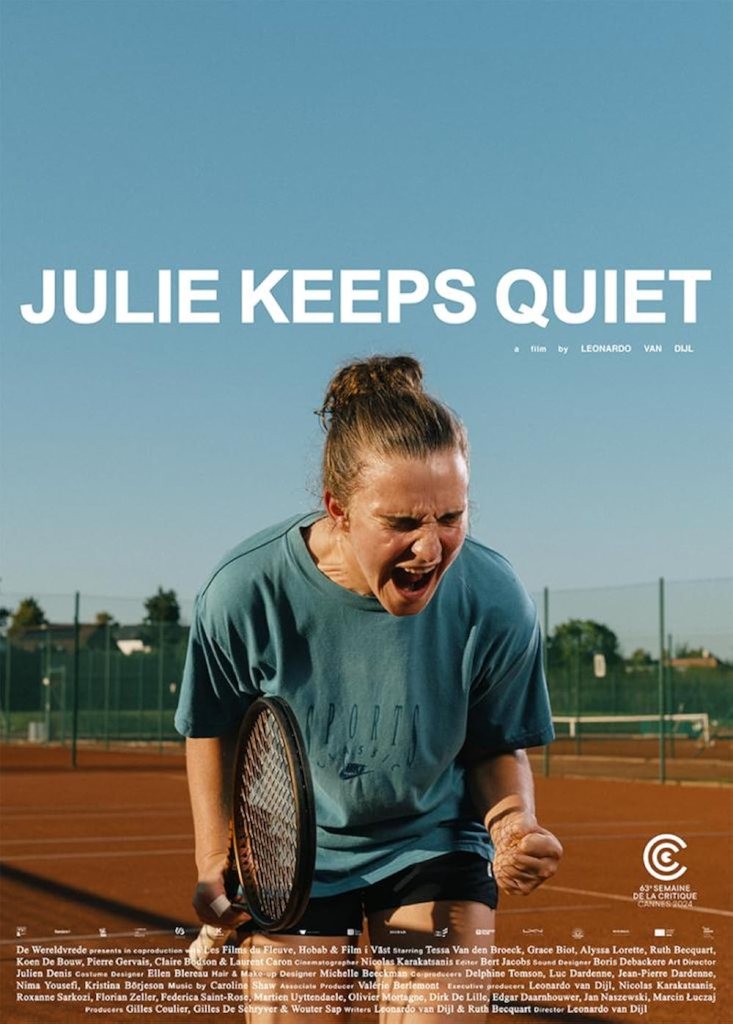
Phew, we’ve narrowly avoided an American movie with superstar actors being my favourite film at TIFF this year! Julie Keeps Quiet is, however, somehow only the second best tennis film of the year despite being the highlight of my TIFF experience and that’s a tragic technicality (curse, you Challengers! Just kidding, I love you Challengers. I’m sorry).
Julie Keeps Quiet, in some ways, feels like Aftersun in that you’re often shown scenes that seem oddly innocuous and it’s up to the audience to parse their significance. The film follows Julie (Tessa Van den Broeck), a Belgian high school tennis prodigy whose esteemed coach is suddenly put on leave for reasons that aren’t immediately clear – but you can guess why as soon as you see how people react. What we have here is the most nuanced take on the #MeToo movement since Tár. Instead of focusing on the perpetrator, though, we’re lasered in on just Julie, a girl with an immense weight on her shoulders paired with devastating trauma – and all she wants to do is move past this while everyone around her respectfully prompts her to voice her truth. The important people in Julie’s life are supportive, understanding, and willing to help, and yet we can still see that Julie is tortured by the idea of making her experiences more than something that happened in the past between just her and the coach. Everything can be done right by everyone surrounding the problem and the trauma can still be too much to bear.
The way Julie copes with her feelings is enthralling to witness despite, or perhaps because, so little is shown explicitly. She uses tennis as her support structure, channeling everything she can into her abilities as a player so that she can block out the silent turmoil she’s experiencing. But we see the little ways it still affects her – her grades start to dip slightly. She’s closed off despite her friends being so kind. She, most upsettingly, still speaks to her former coach on rare occasion, seeking the advice she’s used to him providing.
Van den Broeck, who had never acted before in her life, is absolutely phenomenal and brings a subtlety very few young actors could bring to a role like this, let alone a real life tennis player who happens to act a little on the side. The whole film is so grounded and restrained, with director Leonardo Van Dijl having a masterful understanding of his subject and the art of tennis as a light in the darkness. I very much hope this movie gets a wider release and everyone else gets to see it; if this ends up drifting away among the sea of TIFF movies I’ve watched and never heard about again I’ll be furious. Julie Keeps Quiet deserves to be seen more than any other film on this list.
 I'm Right Reviews
I hope it wasn’t your company that caused you to rank Pedro Paramo so low!
LikeLike